A question before we start. Imagine a door that has not opened in ten years. Behind it, someone your age, give or take. They are not sick in any way a doctor can medicate. They are not in trouble. They have simply decided — quietly, finally — that the world on the other side of that door is not for them. And the door locks from the inside.
Now imagine the person who has been sliding a tray of food under that door, twice a day, for the last decade. They are in their eighties. They are also your parents' age — give or take. They are running out of years before the question stops being what do we do with our son and becomes who finds him, the day we don't come down the stairs. That is the situation. That is the one Japan is in. So before we get to the word, the data, the industry — whose door is it? Hold that thought. The whole story is in the answer.
Ask yourself, honestly: if the door of your room locked from the inside, and you were the only one with the key — at what point, in what year of your life, would you have used it? Fourteen, the year everything got loud? Twenty-two, the first time you weren't picked? Thirty, after the loss that broke something loose? Be precise. The number you came up with is the number that produced a million and a half people you've never met.
The word that named a silence
There was no name for this until 1998. That's not a metaphor — there genuinely wasn't. A Japanese psychiatrist named Tamaki Saitō published a book that year, Shakaiteki Hikikomori — Owaranai Shishunki, which translates to something like "social withdrawal: an adolescence that never ends." The word itself — hikikomori (引きこもり) — combines two verbs: hiku, to pull back, and komoru, to shut oneself inside. He had been seeing these patients for years. They were not depressed in the ordinary sense. They were not psychotic. They had simply, somewhere in their teens or twenties, disappeared.
Saitō's first estimate, in that 1998 book, was that there were "hundreds of thousands" of them in Japan. The number sounded impossible. He later revised it upward — to somewhere between one million and one-point-five million — and the rest of the country spent the next two decades quietly confirming he was right. He gave the unnamed a name. The name, it turned out, fit a million and a half people who had been waiting for it.
The room
So what does it actually look like? Take the case the BBC documented in 2013 — a Tokyo woman they called "Yoshiko." Her son, she said, had withdrawn from society very gradually when he was 22. At first he would still go out to buy groceries. Then he stopped going out. Then he stopped leaving his room. By the time the BBC interviewed her, he was 50 years old and had not left the room for the better part of 28 years. His mother had been caring for him through nearly three decades of a silence she could not break.
The clinical picture the researchers keep arriving at is consistent and a little unsettling in how ordinary it is. The defining behaviour is pure retreat — at least six months with no school, no work, no social contact outside the family, the threshold Saitō set. Most reverse their sleep cycle entirely: awake at night, asleep by day. Many use the internet or games for hours. The thing that surprises people is that they are not, mostly, prisoners of a breakdown. They are people who, at some specific moment, decided the world outside the door cost more than the room did — and never re-decided.
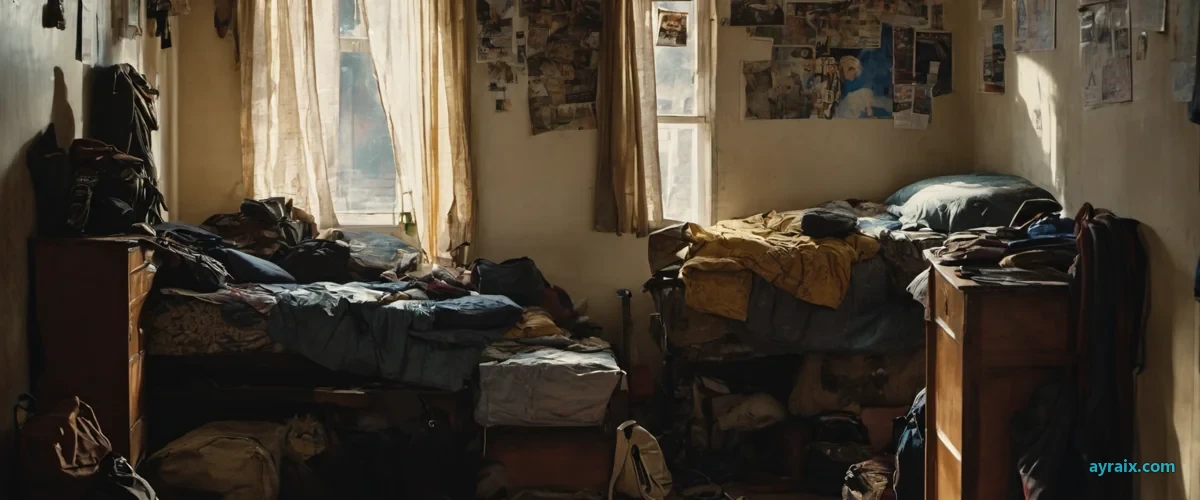
Here's the most uncomfortable part, and it's worth sitting with: most of them do leave the room, occasionally — at 3 a.m., to the convenience store on the corner, when no one they know is awake to see. The fantasy of the hikikomori is a sealed bunker. The reality is a person who has calculated the precise hour of the night at which the world is empty enough to be safe. If you've ever driven three streets out of your way to avoid running into someone — you have walked a small, unremarkable distance down the same road. They just kept walking.
The data, with the caveat that matters
The Japanese government has been trying to count them since 2010, and the numbers are the kind that have to be read carefully. A 2010 Cabinet Office survey estimated 696,000 hikikomori aged 15–39. A 2016 follow-up put the same age group at 541,000 — and researchers warned the apparent fall was an illusion, because the teenagers of 2010 had simply aged past 39 and out of the survey, not out of their rooms. So they added an older bracket. A 2019 survey of people 40–64 estimated another 613,000. Add the two together and the headline that ran through the world's press in 2019 was: over a million people in Japan are living as recluses.
Then, in 2023, the Cabinet Office ran it again — bigger, broader, 30,000 people aged 10 to 69 — and the Guardian put the number at almost 1.5 million working-age Japanese, with roughly 20.6% of cases attributed to the lifestyle changes the pandemic imposed. One in five. That is not a footnote — that is the part of the curve you should be frightened of. The virus came and went. The withdrawal, for a fifth of them, stayed. Lockdowns were repealed. Doors were not.
There's one more number that's worth stopping on, because of what it implies about the shape of the problem: women are a minority of hikikomori, but they are not a rounding error. Saitō estimated early on that roughly 80% of his cases were men; the government's 2019 survey of the 40–64 bracket put the male share at 76.6%. Mostly young men, mostly. But "mostly" leaves a population of reclusive women large enough, on its own, to fill a small city. The condition is not a male condition. The reporting has been a male story, almost entirely, and that gap is its own uncomfortable fact.
The 8050 problem
Walk the timeline forward thirty years from the start of the phenomenon and you arrive at the single sentence everyone in Japan now uses to talk about it: the 8050 problem. Parents in their eighties, still feeding a child in their fifties who never came back out. The Child Care handbook runs out of pages long before this. There is no chapter for an eighty-year-old mother carrying a tray to a fifty-five-year-old son who went into his room when she was middle-aged and never came out.
The fear at the bottom of it isn't abstract. Every family in this situation understands, in the way you understand a clock, that the math runs out. A 28-year retreat ends one of two ways — the door opens, or the person on the other side of it stops being able to bring the tray. When that happens, an aging recluse is sometimes found only days later, in a flat that has gone quiet for reasons the neighbours couldn't name. There is no single famous named case worth pinning this story's emotional weight on — but the 8050 frame exists because this is the documented, recurring way these stories end. The fear is not theoretical. It is the operating assumption of every social worker in the field.
The family you can rent
Now the part of the story you came here for, and the part where Japan stops being a tragedy and becomes something stranger. You can rent a family. Not a therapist, not a support group — a person, paid to walk into your house and pretend to be someone you've lost or someone you never had. The agency at the centre of the reporting is called Family Romance, founded in Tokyo by a man named Yuichi Ishii. The price, in the case that broke the story, was about ¥20,000 per session — around $130–$200 depending on the year — plus expenses. For that, a stranger becomes your son, your father, your husband, your wedding guest, your applause at a graduation nobody in your real life will attend.
The case the Atlantic documented in 2017 is the one that should not leave you. A single mother came to Ishii. Her daughter was 12. The girl was being bullied at school because she did not have a father. So Ishii became the father. He attended school events. He met teachers. The girl, for the entire duration of the deception, believed he was her real dad. When the Atlantic interviewed him, he had been playing her father for eight years. She had just graduated high school. He told the interviewer, plainly: "I am the only real father that she knows." The mother, he said, had no plans to stop. The performance was flawless. The betrayal was invisible. The agency had become the family.
The uncomfortable question, stated plainly: would you pay a stranger to be your son's father? Sit on it, don't reflex. The version of you that says no immediately — is it the version that has never had to choose? The parents who call Family Romance are not cruel. They are paying ¥20,000 because the alternative, in the arithmetic of their situation, was worse than the lie. So the question is not whether renting a parent is wrong. The question is what kind of world makes the lie the cheap option, and what kind of country has decided that's tolerable.
South Korea pays you to come out
The neighbour that figured out it had the same problem, and decided to throw money at it, is South Korea. In April 2023, South Korea's Ministry of Gender Equality and Family launched a measure paying reclusive young people — between the ages of 9 and 24, from lower-income households — a monthly living allowance of 650,000 won, roughly US$490, specifically to coax them out of their rooms and back into the world. Counselling, education, healthcare, even "correction of appearance" subsidies, ride alongside the cash.
It is not a perfect policy. It is, almost certainly, not enough money. But it is the first time a government looked at a generation going silent and decided the right response was to pay them to be loud again — to make leaving the room a financially survivable act, not a moral one. Japan has rental fathers. South Korea has a cheque. Two countries, the same condition, two entirely different theories of what a human withdrawing is owed.
Some rental services sell presence, not illusion
There is a half of this story that complicates every easy judgement, and it has to be told. Not every rental service is Family Romance. Some of the agencies in this space don't sell illusion at all — they sell presence. A real human being who shows up, sits with the hikikomori, plays a game, shares a meal, asks nothing, and leaves. Newstart and a network of NPOs across Japan run versions of this; the KHJ National Federation of Families with Hikikomori has been doing the slow, unglamorous work of reintegration for years. The single most striking statistic anyone in the field will hand you, if you ask them which kind of intervention actually works, is that for the agencies whose entire business is presence rather than performance, anecdotally a clear majority of the people they sit with eventually come back out.
That distinction — presence, not performance — is doing a lot of work in this piece, and it should. The rental father sells you the lie that your child has a parent. The presence worker sells the truth that someone showed up. Those are not the same industry. They are not even the same impulse. One of them is the moral wound. The other might be the only thing that has ever closed it.
The door locks from the inside
Here is the argument, in full, and then it's your turn. A psychiatrist in 1998 gave a name to a million and a half people who had been waiting for one. The oldest of them are now in their fifties; the parents who fed them are in their eighties, and the tray will run out one day. A whole industry arose to sell back to families the people the rooms had taken — a fake father for the price of a dinner. And next door, a government decided to pay its silent generation to come out instead, and some of them did.
And you. The door in your version of this story is not real, probably. But the version of you that considered locking it — at fourteen, or twenty-two, or thirty — is the same mind that locks it for ten years in a Tokyo suburb. This is not a story about a strange country. This is a story about how thin the wall is between the you reading this and the you who stopped answering. The wall is thinner than you think. For a fifth of the people on the wrong side of it, the only thing that finally pushed them across was a virus that told the whole world to stay inside for a year. They listened. They kept listening.
The uncomfortable question, the real one: when the door of your room locks from the inside — when you are the only person with the key — what part of you decided that was okay? Not Japan's part. Not the algorithm's part. Yours. The hikikomori aren't a foreign problem. They're a mirror, with the lights turned down. Look at it long enough to recognise the face.
Full story, sources, and the argument — ayraix dot com. Trendz.